

Botox vs Dysport Differences Explained
A smoother forehead is not just about reducing lines. It is about choosing the right product, the right dose, and the right injector for your facial anatomy and goals. When patients ask about botox vs dysport differences, they are usually trying to answer a more personal question: which option will give me natural-looking results that fit my face and lifestyle?
Both Botox and Dysport are injectable neuromodulators. They relax targeted muscles to soften dynamic wrinkles, especially in areas like the forehead, glabella, and crow's feet. They work through the same general mechanism, but they are not identical products, and those differences can matter depending on how quickly you want results, how broad an area is being treated, and how your muscles typically respond.
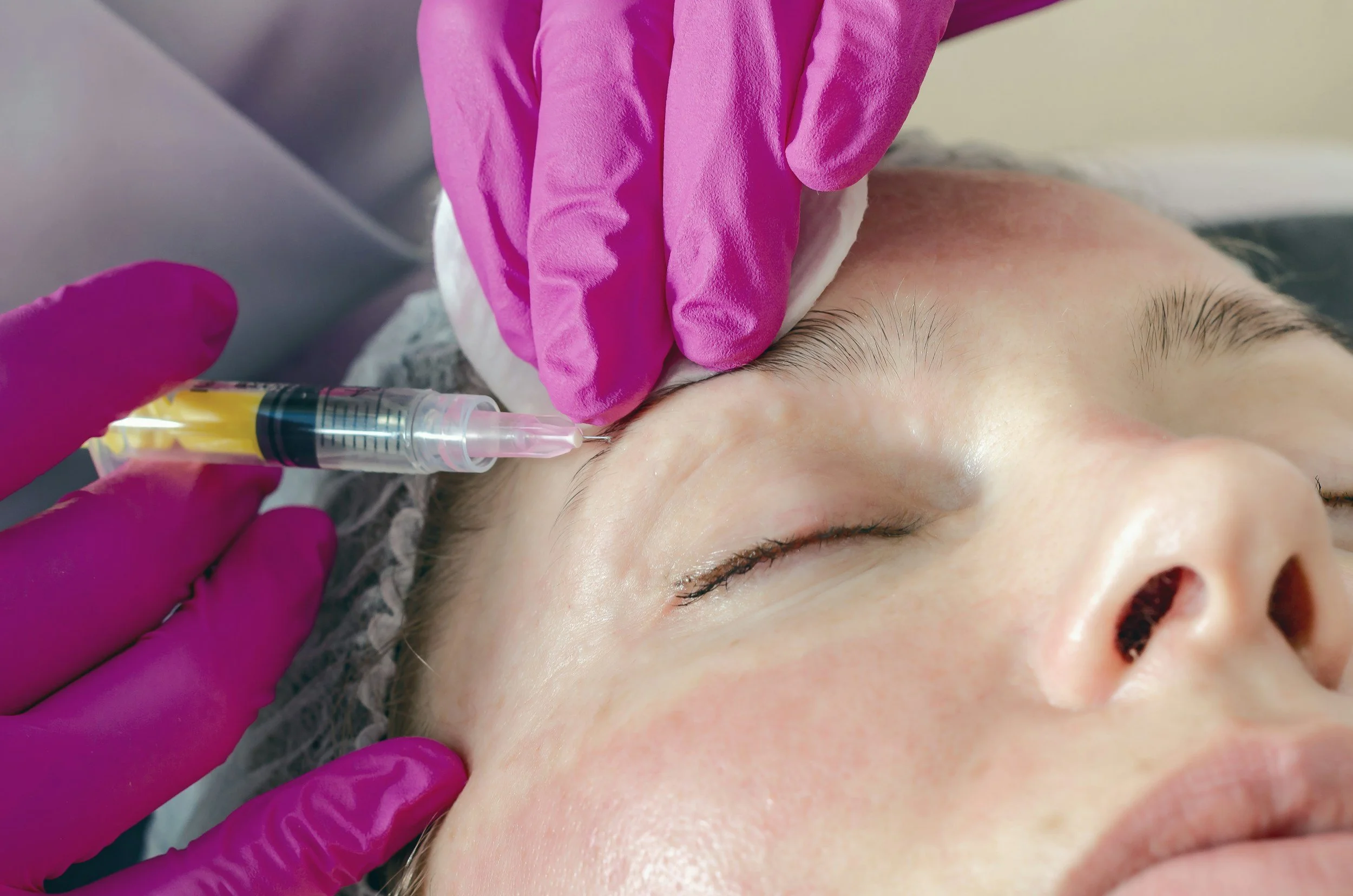
Botox vs Dysport differences at a glance
The simplest way to think about Botox and Dysport is that they are in the same category, but they are formulated differently. Both are derived from botulinum toxin type A and are used to reduce muscle activity that causes expression lines. In experienced hands, both can produce refined, natural results.
Where they differ is in unit measurement, diffusion, and sometimes the speed at which patients notice improvement. Dysport tends to spread a bit more from the injection point, which can be useful in broader treatment areas such as the forehead. Botox is often described as slightly more precise in smaller or highly targeted zones. That does not make one universally better than the other. It means the product should match the treatment plan.
Another point that often causes confusion is dosing. Botox units and Dysport units are not interchangeable on a one-to-one basis. If a patient hears that one treatment uses more units, that does not mean it is stronger or weaker. It means the products are measured differently.
How Botox and Dysport work
Botox and Dysport temporarily block the nerve signals that tell specific facial muscles to contract. When those muscles relax, the overlying skin appears smoother. This is why these treatments are commonly used for frown lines between the brows, horizontal forehead lines, and crow's feet.
The key is selective muscle relaxation, not a frozen appearance. A physician-led approach matters because facial balance is not just about removing movement. It is about reducing the muscle pull that creates unwanted lines while preserving natural expression.
This is also why consultation matters. A patient with strong glabellar muscles, a heavy forehead, asymmetry, or hooded lids may need a very different plan than someone treating early fine lines for prevention.
Onset time and how fast results appear
One of the most discussed botox vs dysport differences is onset. Dysport is often reported to kick in a little faster for some patients, sometimes within two to three days. Botox often begins showing noticeable improvement around three to five days, with full results usually developing by about two weeks.
That said, faster is not always the deciding factor. Some patients prefer a gradual transition, while others want the earliest visible change possible before an event or work presentation. The difference is real enough to discuss, but not so dramatic that it should outweigh injector skill or treatment planning.
Results with either product should be assessed after the full effect has developed. Judging too early can lead to unnecessary touch-up decisions.
Spread and precision
Dysport's wider diffusion can be an advantage in large treatment areas. For example, a broad forehead may benefit from a product that disperses a little more smoothly across the muscle pattern. In the right patient, that can create a softer, even result.
Botox is often preferred when a more contained effect is desired. Areas that require careful placement and fine control may benefit from that narrower spread. This can be especially relevant when treating around the brows or other zones where muscle balance affects shape and expression.
Neither characteristic is inherently superior. It depends on anatomy, treatment area, and injector technique. A skilled clinician can use either product strategically, but the product's behavior still influences planning.
Units, strength, and why numbers can be misleading
Patients often compare pricing or treatment plans by unit count, which can be confusing. Botox and Dysport are dosed differently, so a higher number of Dysport units does not mean a stronger treatment or a worse value. The conversion is not exact across every scenario, but it is generally understood that you need more Dysport units to achieve a comparable clinical effect.
This is why treatment should never be judged by numbers alone. The better question is whether the total dose, product choice, and injection pattern are appropriate for your muscle strength and aesthetic goals.
At a premium medical practice, the focus should be on outcome, safety, and facial harmony, not simply the lowest advertised unit price.
How long Botox and Dysport last
For most patients, both Botox and Dysport last around three to four months. Some people metabolize neuromodulators more quickly and notice movement returning sooner. Others may maintain results longer, especially after consistent treatment over time.
Longevity depends on more than the brand name. It can be influenced by dose, the area treated, muscle strength, exercise level, and individual metabolism. A patient with very active forehead muscles may need a different maintenance schedule than someone treating mild crow's feet.
If you are choosing between the two based on duration alone, the difference is usually not large enough to be the sole factor. In real-world practice, injector technique and individualized dosing often have a bigger impact on satisfaction.
Side effects and safety considerations
Botox and Dysport have similar safety profiles when administered by qualified medical professionals. Common side effects include mild swelling, redness, tenderness, or bruising at the injection sites. These effects are usually temporary.
The more meaningful safety issue is placement. If a neuromodulator is injected incorrectly or if the wrong dose is used, patients can experience eyelid heaviness, brow asymmetry, or an unnatural look. That is why physician oversight and detailed facial assessment matter.
Patients should also disclose their medical history, medications, prior response to neuromodulators, and whether they are pregnant or breastfeeding. Safe treatment starts well before the injection itself.
Which one looks more natural?
Patients often ask whether Botox or Dysport looks more natural. The honest answer is that natural-looking results depend more on the injector than the label on the vial. Both products can look elegant and refreshed when dosed correctly.
What makes results look artificial is usually overtreatment, poor placement, or a plan that ignores the rest of the face. A natural outcome respects facial movement. It softens the lines that make you look tense or tired while keeping expression intact.
For some patients, Dysport's broader spread creates a very smooth result in the forehead. For others, Botox's precision helps preserve just the right amount of lift and movement. This is where customization becomes more important than brand preference.
Who may prefer Botox and who may prefer Dysport?
Botox may be a strong fit for patients who want highly targeted treatment or who have done well with it in the past and prefer consistency. It is also a common choice for those treating smaller zones where precision is a priority.
Dysport may appeal to patients who want a potentially faster onset or who are treating larger areas where slightly broader diffusion may be beneficial. It can also be a good option for patients who simply respond better to its formulation.
The right answer often comes from a facial assessment rather than a generic product comparison. At practices like PrimeCellMed, treatment planning should start with muscle movement, facial structure, and the result you want to see in the mirror, not with a one-size-fits-all recommendation.
The decision that matters most
If you are weighing botox vs dysport differences, the most valuable distinction may not be the product at all. It is whether your treatment is being guided by medical expertise, anatomical precision, and a clear understanding of your goals.
A well-chosen neuromodulator should not make you look like someone else. It should help you look rested, polished, and naturally refreshed. The best next step is not chasing whichever name sounds better. It is choosing a qualified injector who knows when each option makes sense for your face.